
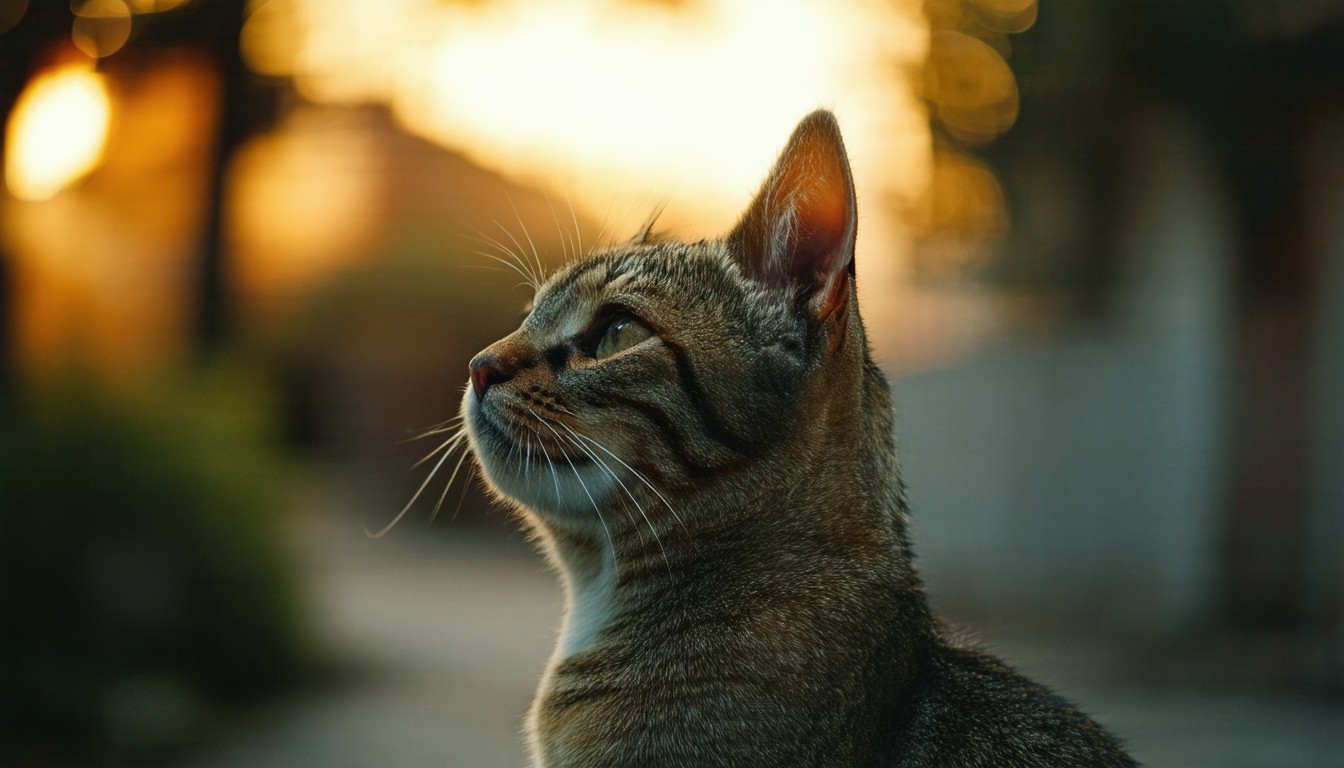
Can cats see in the dark? This question has fascinated cat owners, biologists, and folklore storytellers alike. The image of a cat silently navigating dimly lit alleyways or pouncing on unseen prey at dusk is more than a cliché—it’s anchored in remarkable biological adaptation. While cats aren’t endowed with supernatural vision, their eyes possess several built-in advantages, honed over millennia as both predator and prey. Understanding feline night vision not only deepens our appreciation for these animals but also reveals lessons about evolution, sensory perception, and human relationships with domestic pets.
How Cats See: The Feline Eye Versus Human Vision
Cats’ eyes are architectural wonders, specifically designed to maximize available light and provide superior vision in low-light conditions. Comparing the feline eye to its human counterpart reveals stark differences:
Anatomical Adaptations for Night Vision
- Large Corneas and Pupils: A cat’s cornea and pupil are significantly larger in proportion to its eye than those of humans. When light is low, a cat’s elliptical pupils can expand to cover much of the visible eye, drawing in as much light as possible.
- Tapetum Lucidum: Perhaps the most famous feline adaptation, the tapetum lucidum is a reflective layer behind the retina. It acts like a mirror, bouncing incoming light back through the retinal cells for a second chance at detection. This is why cats’ eyes glow eerily in photographs or when caught in headlights.
- Rod-Dominated Retinas: While the human retina is rich in cones (for color and sharp daylight vision), the feline retina is packed with rods, which specialize in detecting light and motion.
Superior Low-Light Performance
- Light Sensitivity: Studies suggest cats require as little as one-sixth the amount of light that humans need to see effectively.
- Motion Detection: The abundance of rod cells also makes cats spectacularly adept at detecting movement, crucial for both hunting and evading threats.
“A cat’s night vision is the product of millions of years of evolutionary fine-tuning. While they don’t see in complete darkness, their ability to navigate and hunt in near-black environments is unmatched among common domestic animals.”
— Dr. Jennifer Coates, DVM, Veterinary Advisor
Myths and Realities: Can Cats See in Complete Darkness?
The idea that cats can see in pitch blackness is a persistent myth, amplified by literature and popular culture. Reality, however, is more nuanced.
The Limits of Night Vision
- Not True “Night Vision”: While cats excel at seeing in dim settings, they cannot see when there’s zero light—total darkness leaves them as blind as any other creature.
- Dependence on Minimal Light: Moonlight, starlight, or residual street lighting is required for their special adaptations to function.
How Cats Compensate in Near-Darkness
- Whisker Sensitivity: Beyond eyesight, cats use their ultra-sensitive whiskers to detect slight air currents and physical obstacles.
- Acute Hearing: Their ears can swivel and pinpoint the faintest rustle, allowing navigation and hunting even with limited visual input.
These layered senses work together, providing a robust “night vision system” that, while not infallible, puts human capability to shame.
Evolutionary Context: Why Did Cats Evolve Such Vision?
Domestic cats descend from wild ancestors—many of whom led crepuscular or nocturnal lifestyles. Their survival depended on effective nighttime hunting and predator avoidance.
The Wild Cat Legacy
- Nocturnal Hunting: Prey species like rodents and insects are most active during dawn and dusk. Superior low-light vision gave ancient cats a critical evolutionary edge.
- Predator Evasion: Being able to identify threats at night improved survival for both adults and kittens.
- Domestication and Adaptability: Even today, pet cats may awake and roam at night, echoing ancient patterns despite the safety of indoor living.
Cat behaviorist Jackson Galaxy often remarks on this heritage:
“If you hear your cat racing around at 2 a.m., it’s not just mischief. It’s an echo of thousands of years of instinct to be alert and active when others sleep.”
How Does Feline Night Vision Affect Domestic Life?
The unique visual abilities of cats translate into everyday behaviors within our homes and neighborhoods.
Common Observations Linked to Night Vision
- Nocturnal Playfulness: Many cat owners note increased activity at night; this isn’t due to restlessness, but an evolutionary drive to hunt in low light.
- Eye Shine in Photos: The reflective tapetum lucidum is responsible for those green or gold “demon eye” effects in flash photography.
- Preference for Twilight Exploration: Outdoor cats may prefer early morning or evening outings, when their visual advantages peak.
Considerations for Cat Owners
- Lighting Needs: While cats don’t require complete darkness to sleep, they also don’t need bright night lights to navigate safely.
- Stimulation and Safety: Providing safe indoor activities at dusk or dawn can help satisfy their natural instincts and prevent nighttime escapades in risky environments.
Comparing Feline Vision to Other Species
Cats are far from unique in their adaptations for low-light vision, but their abilities sit at an interesting intersection among domestic animals.
The Feline Advantage
- Dogs vs. Cats: Though both species possess the tapetum lucidum, cats generally outperform dogs in low-light agility and precision.
- Versus Humans: Human eyes, rich in color-detecting cones, outperform cats in daylight and discern a broader range of shades. But at night, the tables turn decisively in the cat’s favor.
The Broader Animal Kingdom
Owls, snakes, and certain deep-sea creatures vastly exceed even a cat’s sensory capabilities in the dark. Yet among mammals, domestic cats stand out as highly efficient nocturnal navigators—a testament to evolutionary adaptation shaped by environment and need.
Conclusion: Living With a Nighttime Specialist
Cats can’t see in total darkness, but their extraordinary low-light vision—backed by specialized eyes and enhanced by sensitive hearing and whiskers—sets them apart from humans and many other animals. These adaptations are the product of wild ancestry and serve a critical role in the modern balance between natural instinct and housecat comfort. Understanding these unique traits invites better care and enriches the human-feline relationship, whether that means respecting their twilight zoomies or marveling at their mysterious gaze.
FAQs
Can cats really see in total darkness?
No, cats cannot see in complete absence of light. They excel in low-light conditions but need at least minimal ambient light to navigate.
Why do my cat’s eyes shine at night?
The “glow” comes from the tapetum lucidum, a reflective layer in the eye that boosts their ability to see with limited light.
Do cats see colors in the dark?
While cats can detect some colors, their night vision relies mostly on rods, which are more sensitive to light but less capable of processing color. Dusk and dawn appear mostly in shades of gray to them.
Are indoor cats better or worse at seeing in the dark than outdoor cats?
Both indoor and outdoor cats have the same eye adaptations related to night vision. Exposure to different lighting conditions does not directly alter their biological ability.
How can I help my cat feel secure at night?
Ensure safe, clutter-free spaces for nighttime exploration and provide cozy, accessible sleeping areas. There’s no need for excessive lighting as cats manage well in naturally dim environments.
Can kittens see as well in the dark as adult cats?
Kittens develop their full night vision gradually as their eyes mature, generally matching adults by a few months of age. In early life stages, young kittens may be more cautious in low-light settings.

